Modern Work, Classic Manners: Why Office Etiquettes Still Matter
Workplaces today are very different from what they used to be. Remote meetings, digital tools, and hybrid work setups sometimes make traditional workplace rules seem outdated. One thing, however, has remained constant: the way we treat each other and its effect on how well we work together. Workplace etiquette courses cover simple habits that smooth out teamwork and improve the work environment.
Why Office Etiquette Still Matters
Office etiquette is really just about being thoughtful. Arriving on time, replying to messages nicely, and keeping things quiet in shared areas make life at work smoother. When everyone does this, it makes the office a better place for everyone.
Good office manners influence how others view you. No matter if you’re just starting out or managing others, being dependable and respectful says a lot about you. Small, consistent habits turn you into someone people enjoy working with, which every organization values.
The New Rules of Workplace Etiquette
Today’s offices look nothing like they did a few years ago. With hybrid work and online communication, a lot of work happens through screens. You might hop on a video call from home, send updates over chat, or manage projects with colleagues in other time zones. Even if some old rules feel less relevant, good etiquette, such as respect and thoughtfulness, can still make a difference.
Working from home or in the office, it’s important to stay respectful and professional. Showing up on time for meetings, muting yourself when necessary, and answering messages quickly show that you can be trusted. These small habits make teamwork run more smoothly.
Public speaking classes are more than just presentation training. They teach you how to communicate clearly and confidently every day. Whether you are sending a quick message or participating in a team call, these skills help you get your point across and work more smoothly with others.
The Myth That Etiquette Doesn't Matter Anymore
Offices are way more open these days, and old-school rules sometimes get forgotten. People often think that being too formal slows things down or kills creativity. Honestly, though, ignoring basic respect and personal space can turn tiny issues into bigger conflicts before you even notice.
Notice how one little interruption can make someone frustrated? Or how ignoring boundaries makes teamwork messy? Over time, that can really hurt how a team feels and performs. A little respect can bring the balance back.
Many organizations now recognize this and encourage employees to participate in programs like self-confidence improvement sessions or team-building workshops that reinforce empathy, patience, and self-awareness—qualities that directly support good etiquette.
Must Read: The ROI of Corporate Soft Skills Training: Is It Worth the Investment
Leadership and the Example They Set
How leaders act has a huge impact on the office etiquette. A manager who communicates with politeness, listens well, and appreciates team efforts sets the standard for everyone else. Being a strong leader isn’t only about the work assigned—it’s about earning trust, treating everyone fairly, and showing respect consistently.
A professional development institute helps aspiring leaders build the interpersonal skills that are crucial for effective teamwork. The programs usually teach emotional intelligence, how to give feedback, and how to handle tough conversations. All of these help build a workplace where manners and respect matter. Leaders who do this set the tone, making their teams communicate more thoughtfully.
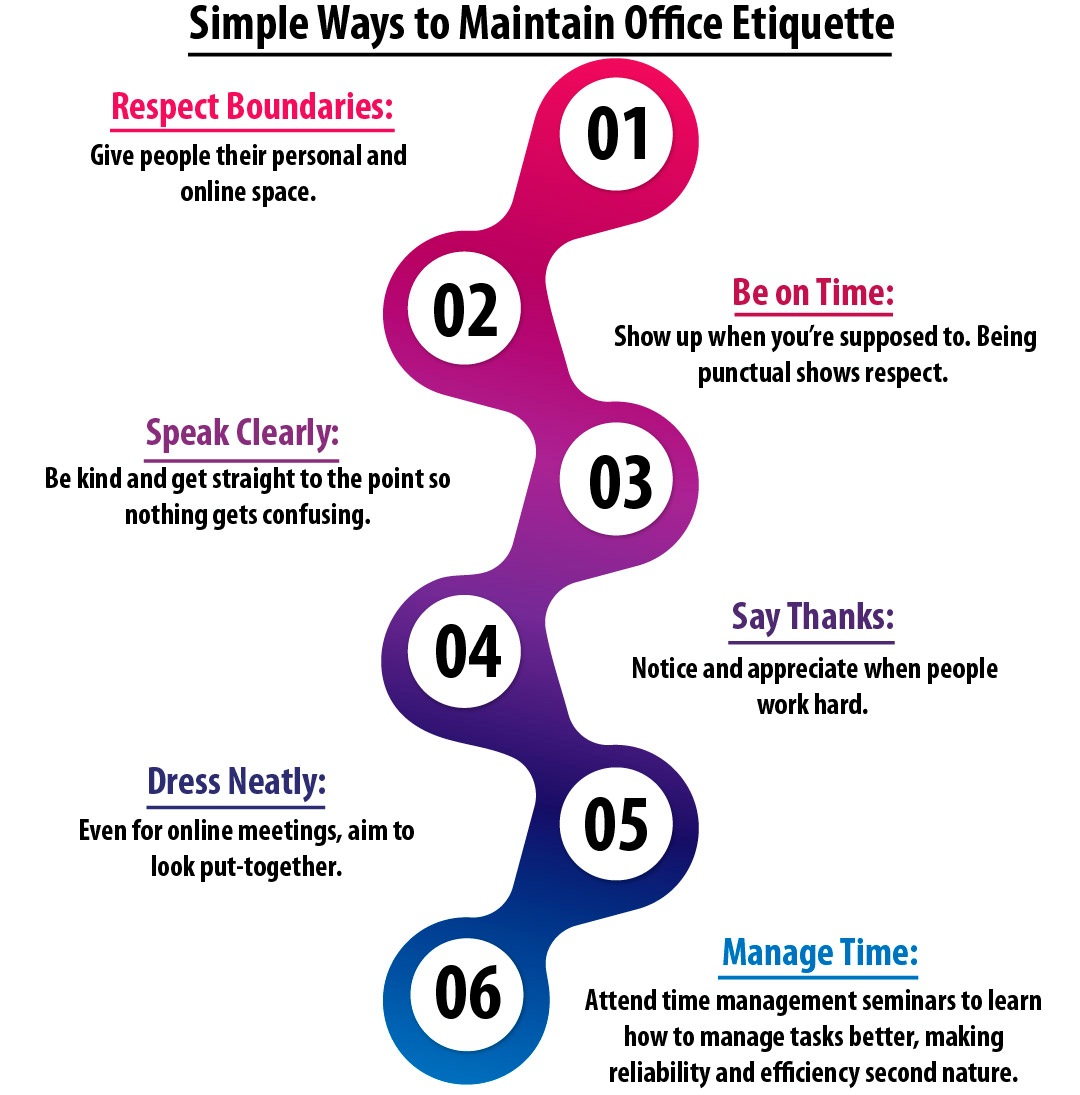
Simple Ways to Maintain Office Etiquette
Even in casual or hybrid workplaces, etiquette can be simple to practice. These tips make it simple to stay professional every day.
- Respect Boundaries: Give people their personal and online space.
- Be on Time: Show up when you’re supposed to. Being punctual shows respect.
- Speak Clearly: Be kind and get straight to the point so nothing gets confusing.
- Say Thanks: Notice and appreciate when people work hard.
- Dress Neatly: Even for online meetings, aim to look put-together.
- Manage Time: Attend time management seminars to manage tasks better, making reliability and efficiency second nature.
Summing Up
No matter how workplaces change, respect and professionalism matter. Etiquette is less about rules and more about understanding how your behavior impacts others. Workplace etiquette courses provide practical guidance on using kindness, clear communication, and respect to foster better collaboration across teams.
Want to master workplace etiquette? Persona’s workplace etiquette sessions teach you how to communicate clearly, gain confidence, and foster a more productive and pleasant workplace. Reach out to learn more.
Frequently Asked Questions
- Why does workplace etiquette still matter?
Good etiquette helps teams work smoothly, builds trust, and makes the office a better place for everyone. - How can public speaking classes improve daily work interactions?
They teach clear and confident communication skills that help in chats, calls, and meetings every day. - What simple habits can improve office etiquette?
Being punctual, respecting boundaries, speaking clearly, showing appreciation, and dressing neatly all make teamwork easier.